
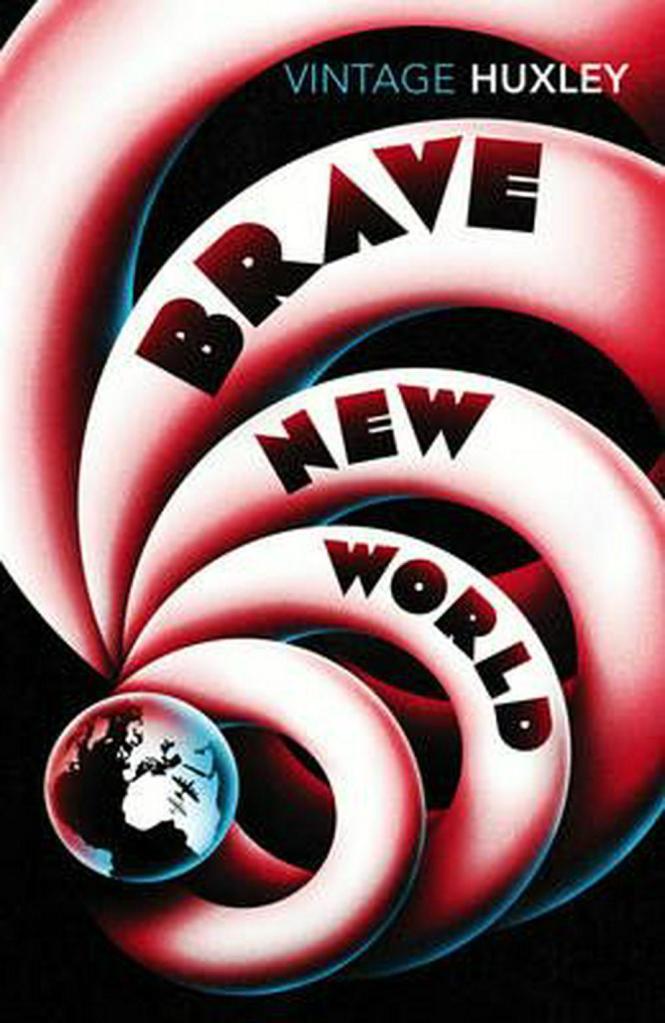
Synopsis: Aldous Huxley’s profoundly important classic of world literature, Brave New World is a searching vision of an unequal, technologically-advanced future where humans are genetically bred, socially indoctrinated, and pharmaceutically anesthetized to passively uphold an authoritarian ruling order–all at the cost of our freedom, full humanity, and perhaps also our souls. “A genius [who] who spent his life decrying the onward march of the Machine” (The New Yorker), Huxley was a man of incomparable talents: equally an artist, a spiritual seeker, and one of history’s keenest observers of human nature and civilization. Brave New World, his masterpiece, has enthralled and terrified millions of readers, and retains its urgent relevance to this day as both a warning to be heeded as we head into tomorrow and as thought-provoking, satisfying work of literature. Written in the shadow of the rise of fascism during the 1930s, Brave New World likewise speaks to a 21st-century world dominated by mass-entertainment, technology, medicine and pharmaceuticals, the arts of persuasion, and the hidden influence of elites.
Average Score: 3.4
Review: In general we all sort of liked this book. We universally disliked the ending! We certainly appreciated the short and easy to read text. Some of the characters could have used more development. The names and references to Ford added context and humour to the book. It makes you think which was a bit distracting as you read but lead to a long and interesting discussion, particularly about whether it was utopian or dystopian!
Synopsis: John Rebus stands accused: on trial for a crime that could put him behind bars for the rest of his life. It’s not the first time the legendary detective has taken the law into his own hands, though it might be the last.
But what drove a good man to cross the line?
Detective Inspector Siobhan Clarke may well find out. Clarke is tasked with the city’s most explosive case in years, an infamous cop, at the center of decades of misconduct, has gone missing. Finding him will expose not only her superiors, but her mentor John Rebus. And Rebus himself may not have her own interests at heart, as the repayment of a past debt places him in the crosshairs of both crime lords and his police brethren.
One way or another, a reckoning is coming – and John Rebus may be hearing the call for last orders…
Average: 3.38
Review: This is a tricky review to write – some of the group really enjoyed it, some found it average. It is easy to read and well written – expected really for a 24 book series! Its slightly predictable as most police procedural books are – embittered ex-police officer stretches what might be considered legal. As one reviewer put it, its a square dance between criminals, cops and criminal cops! There are some twists and turns, some people wanted more.
If you think you know what this book will be like, you’re probably right!
For audiobook fans – the narration on this is particularly enjoyable.

Synopsis: What would you change if you could go back in time?
In a small back alley in Tokyo, there is a café which has been serving carefully brewed coffee for more than one hundred years. But this coffee shop offers its customers a unique experience: the chance to travel back in time.
In Before the Coffee Gets Cold, we meet four visitors, each of whom is hoping to make use of the café’s time-travelling offer, in order to: confront the man who left them, receive a letter from their husband whose memory has been taken by early onset Alzheimer’s, to see their sister one last time, and to meet the daughter they never got the chance to know.
But the journey into the past does not come without risks: customers must sit in a particular seat, they cannot leave the café, and finally, they must return to the present before the coffee gets cold . . .
Toshikazu Kawaguchi’s beautiful, moving story explores the age-old question: what would you change if you could travel back in time? More importantly, who would you want to meet, maybe for one last time?
Average Score: 3.7
Review: In general we found this book well written, charming and enjoyable. Some aspects were a little predictable and its sometimes hard to remember characters. The rules seem a little tedious initially but help shape the book and make sense when you consider this is a play turned novel. We did wonder if it lost something in translation but would recommend if you’re looking for a quick read.
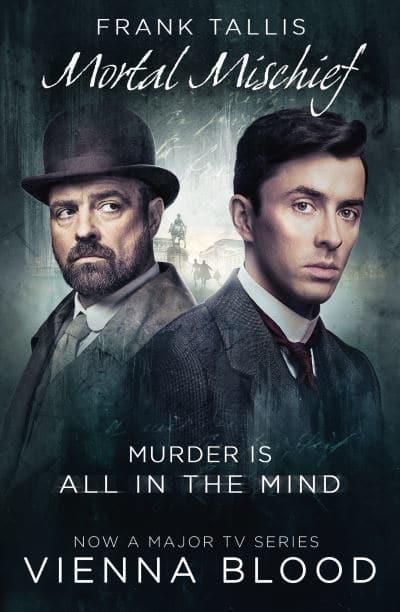
Synopsis: In 1900s Vienna, Psychoanalyst Dr Max Liebermann is called in to help with police investigations into the murder of a young medium.
In this first of a new series of psychoanalytical detective novels set in Vienna, Dr Max Liebermann is a young psychoanalyst – and disciple of Freud. The world of 1900s Vienna is one where philosophy, science and art flourish and are hotly debated in the coffee shops. Psychoanalysis is still developing and is viewed with a mixture of excitement and suspicion.
Liebermann’s good friend Oskar Rheinhardt is a Detective Inspector — hard working but lacking Liebermann’s insights and forensic eye, and so it is through Rheinhardt that Liebermann is called upon to help with police investigations surrounding the death of a beautiful young medium in what seems at first to be supernatural circumstances. When Liebermann attempts to get to the bottom of the mystery, he also must decide whether he is to follow his father’s advice and marry the beautiful but reserved Clara.
Average: 3.17
Review: This book is really very good at setting scenes and bringing 19th century Vienna to life. There was some debate about whether or not this is as good as Sherlock Holmes, we’ll leave you to make your own minds up about that! We felt that at times the book was trying to cover too many topics. We would have preferred fewer topics covered in more depth and more focus on the mystery in hand. The ending is a little predictable but still relatively engaging.
Mixed feedback on the TV adaptation – it might be best to choose one format and stick with that to avoid disappointment!
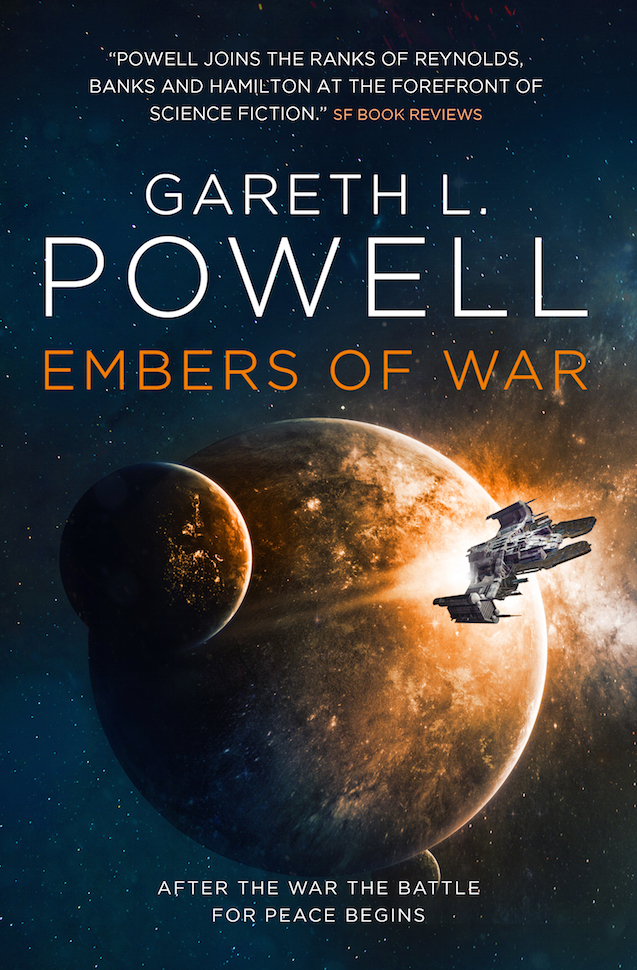
Synopsis: The warship Trouble Dog was built and bred for calculating violence, yet following a brutal war, she finds herself disgusted by conflict and her role in a possible war crime. Seeking to atone, she joins the House of Reclamation, an organisation dedicated to rescuing ships in distress.
But, stripped of her weaponry and emptied of her officers, she struggles in the new role she’s chosen for herself. When a ship goes missing in a disputed system, Trouble Dog and her new crew of misfits and loners, captained by Sal Konstanz, an ex-captain of a medical frigate who once fought against Trouble Dog, are assigned to investigate and save whoever they can.
Meanwhile, light years away, intelligence officer Ashton Childe is tasked with locating and saving the poet, Ona Sudak, who was aboard the missing ship, whatever the cost. In order to do this, he must reach out to the only person he considers a friend, even if he’s not sure she can be trusted. What Childe doesn’t know is that Sudak is not the person she appears to be.
Quickly, what appears to be a straightforward rescue mission turns into something far more dangerous, as Trouble Dog, Konstanz and Childe, find themselves at the centre of a potential new conflict that could engulf not just mankind but the entire galaxy.
If she is to survive and save her crew, Trouble Dog is going to have to remember how to fight.
Average: 4.06
Review: This was a popular book with the group and has squeezed into our top five! As with many books, its a little slow to get started as the different characters are introduced but they soon start to come together and the book picks up in pace.
Its an enjoyable story that’s easy to read and is light on the science for a Sci-Fi book. The ship being sentient adds an interesting dimension and Nod was a firm favourite in the group.
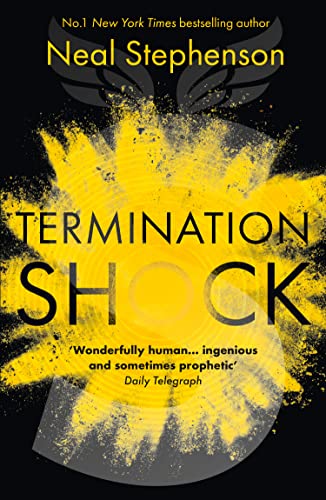
Synopsis:
Neal Stephenson’s sweeping, prescient new novel transports readers to a near-future world where the greenhouse effect has inexorably resulted in a whirling-dervish troposphere of superstorms, rising sea levels, global flooding, merciless heat waves, and virulent, deadly pandemics.
One man has a Big Idea for reversing global warming, a master plan perhaps best described as “elemental.” But will it work? And just as important, what are the consequences for the planet and all of humanity should it be applied?
As only Stephenson can, Termination Shock sounds a clarion alarm, ponders potential solutions and dire risks, and wraps it all together in an exhilarating, witty, mind-expanding speculative adventure.
Average: 1.86
Review: If you’re a fan of books that could use a hard edit or are full of details that you don’t need, this is the book for you! 😉 We have it on good authority that the details around Texas and Louisiana are accurate but probably not worth reading this book for. Interesting theories on how climate change could be tackled but that’s surrounded by 3-400 unnecessary pages of inaccurate physics and forced romances, with a damp squib of an ending!
If you choose to read this, don’t say we didn’t warn you!!
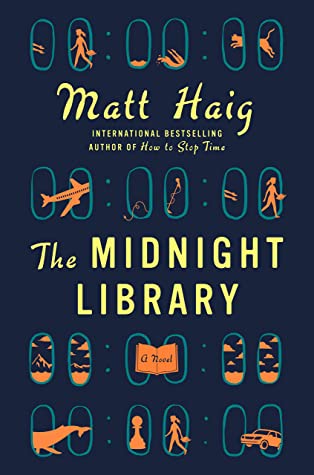
Synopsis: Between life and death there is a library, and within that library, the shelves go on forever. Every book provides a chance to try another life you could have lived. To see how things would be if you had made other choices . . . Would you have done anything different, if you had the chance to undo your regrets? A novel about all the choices that go into a life well lived.
Somewhere out beyond the edge of the universe there is a library that contains an infinite number of books, each one the story of another reality. One tells the story of your life as it is, along with another book for the other life you could have lived if you had made a different choice at any point in your life. While we all wonder how our lives might have been, what if you had the chance to go to the library and see for yourself? Would any of these other lives truly be better?
Nora Seed finds herself faced with this decision. Faced with the possibility of changing her life for a new one, following a different career, undoing old breakups, realizing her dreams of becoming a glaciologist; she must search within herself as she travels through the Midnight Library to decide what is truly fulfilling in life, and what makes it worth living in the first place.
Average Score: 3.18
Review: Despite the very predictable ending, this is a fast, enjoyable read. We thought the concept was great (if a little thin on how it could actually work from a science perspective) but was a little lacking in depth. As an introduction to how anxiety and depression feel its an excellent starting point but all of us wanted more. The “perfect” life was very heteronormative and traditional which was disappointingly cliched, but don’t let that put you off too much! We did wonder what the life you would have chosen from the options would say about us! 😉

Synopsis: Set in seventeenth century Amsterdam–a city ruled by glittering wealth and oppressive religion–a masterful debut steeped in atmosphere and shimmering with mystery, in the tradition of Emma Donoghue, Sarah Waters, and Sarah Dunant.
“There is nothing hidden that will not be revealed . . .”
On a brisk autumn day in 1686, eighteen-year-old Nella Oortman arrives in Amsterdam to begin a new life as the wife of illustrious merchant trader Johannes Brandt. But her new home, while splendorous, is not welcoming. Johannes is kind yet distant, always locked in his study or at his warehouse office–leaving Nella alone with his sister, the sharp-tongued and forbidding Marin.
But Nella’s world changes when Johannes presents her with an extraordinary wedding gift: a cabinet-sized replica of their home. To furnish her gift, Nella engages the services of a miniaturist–an elusive and enigmatic artist whose tiny creations mirror their real-life counterparts in eerie and unexpected ways . . .
Johannes’ gift helps Nella to pierce the closed world of the Brandt household. But as she uncovers its unusual secrets, she begins to understand–and fear–the escalating dangers that await them all. In this repressively pious society where gold is worshipped second only to God, to be different is a threat to the moral fabric of society, and not even a man as rich as Johannes is safe. Only one person seems to see the fate that awaits them. Is the miniaturist the key to their salvation . . . or the architect of their destruction?
Enchanting, beautiful, and exquisitely suspenseful, The Miniaturist is a magnificent story of love and obsession, betrayal and retribution, appearance and truth.
Average Score: 3.3
Review: Some people loved this book, others felt like there was a lot of potential that wasn’t realised. The book skates around the edgae of a few different genres and we’d rather the author had picked one and expanded on those themes. The main characters weren’t particularly likeable and we’d all have liked to have seen more of the servants. The twists were a little predictable. This book is slow to start but soon picks up pace, is easy to read and well written.
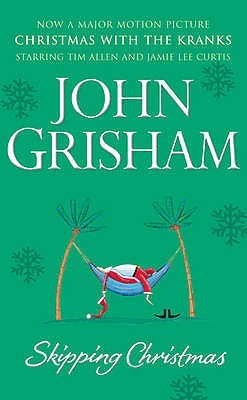
Synopsis:
Imagine a year without Christmas. No crowded shops, no corny office parties, no fruitcakes, no unwanted presents. That’s just what Luther and Nora Krank have in mind when they decide that, just this once, they’ll skip the holiday altogether. Theirs will be the only house on the street without a rooftop Frosty the snowman; they won’t be hosting their annual Christmas Eve bash; they aren’t even going to have a tree. They won’t need one, because come December 25 they’re setting sail on a Caribbean cruise. But, as this weary couple is about to discover, skipping Christmas brings enormous consequences – and isn’t half as easy as they’d imagined.
A classic tale for modern times, Skipping Christmas offers a hilarious look at the chaos and frenzy that has become part of our holiday tradition.
Rating: 2.9
Review: This book is what you’d expect for a Christmas book, but definitely not what you’d expect from John Grisham! Its well written, short and easy to read. Some of the aspects are a bit dated and our resident American confirmed that while these things do occur in the US, they’ve been exaggerated for effect. Its an interesting twist on the traditional Scrooge character (without the ghosts) and good to consider the social obligations around certain events. There were a couple of storylines that we’d like to have explored more.
The film Christmas with the Kranks is a faithful adaptation of the book so if you don’t feel like reading it you can watch the film!

 The Next Chapter Book Club